More Services
EMR/EHR software, built for how you already chart
One connected system for scheduling, charting, and documentation.
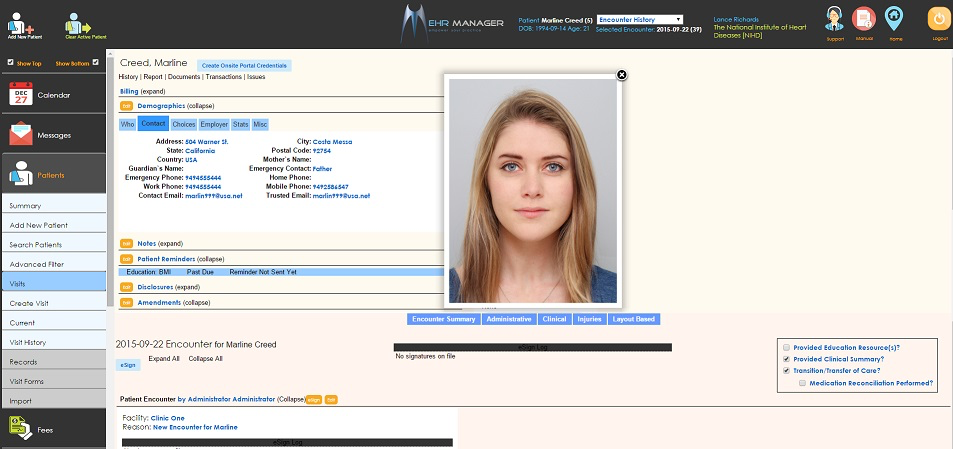
Patient Chart
A single, logical view of everything tied to a specific patient — the details that rarely change sit on one side, and everything that's happened to them is laid out as an event timeline on the other.
- Static Info — demographics, allergies, medical & social history, insurance, referring doctor.
- Events — encounters, labs, imaging, immunizations, flow sheets, notes.
Office Visit
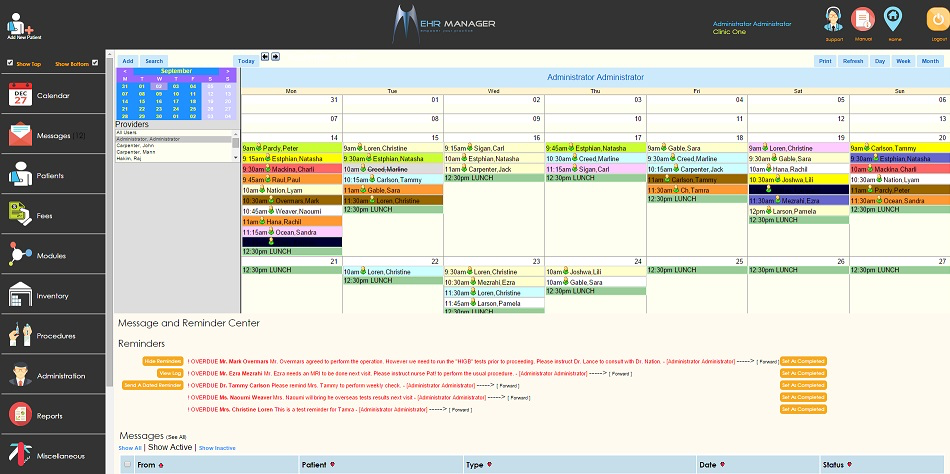
Every provider's day in one color-coded view — appointments, patient names, and visit types at a glance, with a message and reminder center surfacing what needs attention before a chart's even open.
- Color-coded schedule across every provider, at a glance
- Patient reminders and staff messages surfaced automatically
- One click from the schedule into a patient's visit
Built-in tools that keep everything connected
Beyond charting, the system covers the everyday admin work around a visit — without sending you to a separate program to do it.
Remote Access
- Secure, encrypted access to patient charts, appointments, messages, and test results from any computer — home, hospital, or on the road.
Lab Connectivity
- Results deliver straight into the chart through a direct, encrypted connection with your lab partners — no separate portal to check.
File Cabinet
- Scan, store, and edit forms, letters, images, and documents right from a patient's chart, in their native file format.
Productivity Center
- Address book, internal messaging, to-do lists, prescription refills, and time tracking — the daily admin work, built into the same system as your charting.
Documentation that doesn't follow you home
Complete, accurate charting shouldn't mean staying late to finish notes. Templates, quick-entry text, and a chart built around how a visit actually happens keep documentation moving during the appointment, not after it.
The diagnosis and procedure codes from a visit carry through to billing, so a visit doesn't have to be entered twice — and it means fewer callbacks, too, with legible, complete prescriptions the first time and referrals sent with the full picture instead of a partial one.